A Complete Timeline of Events
The Bryan Kohberger Idaho murders timeline explains how four University of Idaho students were killed in November 2022, how investigators reconstructed the events surrounding the crime, and how evidence eventually led to Kohberger’s arrest in Pennsylvania.
On November 13, 2022, Madison Mogen, Kaylee Goncalves, Xana Kernodle, and Ethan Chapin were found dead inside an off-campus residence at 1122 King Road in Moscow, Idaho. The killings triggered a nationwide investigation involving local police, Idaho State Police, the FBI, and other law enforcement agencies.
Investigators examined surveillance footage, cellphone records, vehicle movements, witness statements, and DNA evidence to build a timeline of the crime. More than six weeks after the killings, Bryan Kohberger, a doctoral student in criminology at Washington State University, was arrested.
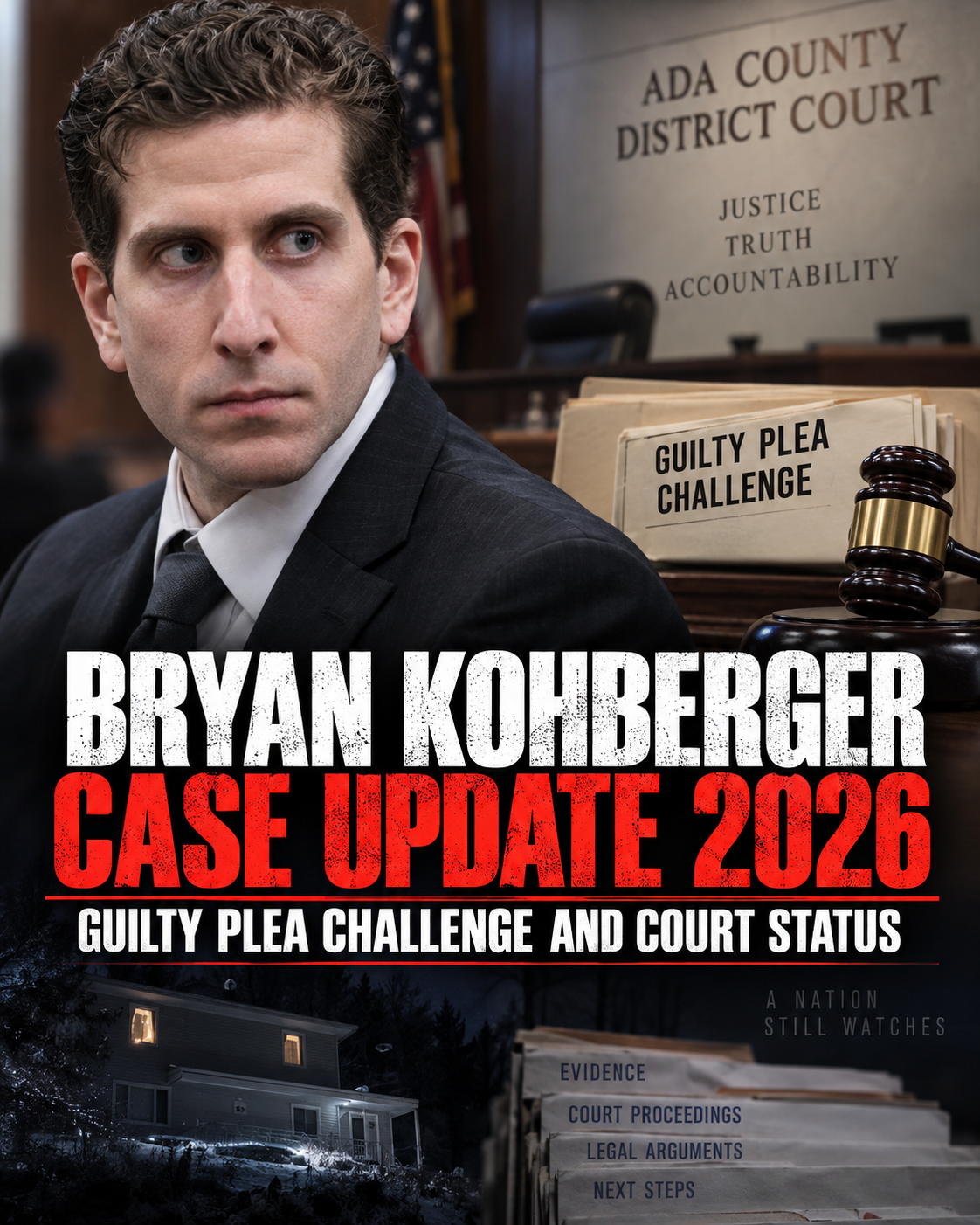
Kohberger pleaded guilty to all four murders in July 2025 and received four consecutive life sentences without the possibility of parole. Although the criminal prosecution concluded with his sentencing, the case remains a significant example of how investigators combine multiple forms of evidence to reconstruct a complex crime.
This article explains what happened in the Idaho murders on November 13, 2022, what investigators discovered, and how the investigation progressed from the initial emergency call to the arrest.
What Were the Idaho Student Murders?
The Idaho student murders refer to the killings of four University of Idaho students at an off-campus house in Moscow, Idaho, during the early morning of November 13, 2022.
The victims were:
- Madison Mogen: A 21-year-old University of Idaho student.
- Kaylee Goncalves: A 21-year-old student who had recently graduated and was visiting Moscow.
- Xana Kernodle: A 20-year-old University of Idaho student.
- Ethan Chapin: A 20-year-old student who was visiting Kernodle at the residence.
The three women lived at the King Road house, while Chapin was staying overnight with Kernodle.
The murders initially presented investigators with several unanswered questions. There was no immediately identified suspect, the murder weapon had not been recovered, and authorities needed to establish who had been at the residence during the relevant hours.
The case became a major national news story because of the victims’ ages, the location near a university campus, and the extensive investigation required to identify a suspect.
November 12–13, 2022: The Night Before the Murders
Reconstructing the students’ final hours was one of the first important steps in the investigation.
Around 9:00 p.m. to 1:30 a.m.: Students Spend the Evening Out
On the evening of November 12, Madison Mogen and Kaylee Goncalves went out in downtown Moscow.
Investigators later established that the two friends visited The Corner Club, a local bar. Surveillance footage helped authorities trace some of their movements before they returned to the King Road residence.
Meanwhile, Xana Kernodle and Ethan Chapin spent part of the evening at the Sigma Chi fraternity house on the University of Idaho campus.
The surviving roommates had also been out separately and returned to the residence before the killings.
Around 1:45 a.m.: Xana Kernodle and Ethan Chapin Return Home
According to information released by Moscow police, Kernodle and Chapin returned to the King Road house at approximately 1:45 a.m.
Their movements helped investigators establish that they were at the residence before the estimated time of the killings.
Around 1:45–2:00 a.m.: Madison Mogen and Kaylee Goncalves Return
Mogen and Goncalves visited a food truck in downtown Moscow after leaving the bar.
They were subsequently driven back to the King Road residence, arriving at approximately 1:45–1:56 a.m., according to the timeline reported by investigators.
Surveillance footage from downtown businesses and other locations helped establish parts of their movements.
By approximately 2:00 a.m., all four victims were believed to be at the house.
November 13, 2022: The Estimated Timeline of the Murders
The precise sequence of every event inside the residence could not be directly established through a complete recording. Investigators reconstructed the timeline using witness accounts, surveillance footage, cellphone data, and physical evidence.
2:42 a.m.: Kohberger’s Phone Stops Reporting to the Network
According to cellphone records described in court documents, a phone associated with Kohberger was in the Pullman area at approximately 2:42 a.m.
The phone then stopped reporting to the cellular network until approximately 4:48 a.m.
Investigators considered this gap alongside other evidence. However, a phone’s failure to connect to a network does not, by itself, establish where its owner was or what the owner was doing.
3:29 a.m.: A White Hyundai Elantra Appears Near the Residence
Surveillance recordings collected from the surrounding neighborhood showed a white Hyundai Elantra traveling near the King Road house.
Investigators later described the vehicle making multiple passes through the area before the suspected attack.
The footage became an important investigative lead because it helped authorities narrow their search for a vehicle that might have been connected to the killings.
Approximately 4:00–4:25 a.m.: Investigators Believe the Murders Occurred
Based on the evidence gathered, investigators believed the four students were killed between approximately 4:00 and 4:25 a.m.
A nearby security camera recorded sounds around 4:17 a.m. that investigators considered relevant to the timeline.
The estimated window was developed by comparing surveillance recordings, witness statements, and other available evidence.
Authorities did not have a complete recording of the events inside the house. Consequently, the exact timing of every action was reconstructed rather than directly observed.
Around 4:00 a.m.: A Surviving Roommate Hears Unusual Sounds
One surviving roommate, identified in court documents by the pseudonym D.M., reported hearing sounds during the early morning hours.
Her account included hearing what she believed might have been one of the other residents speaking and later hearing crying or other unusual noises.
She also reported seeing a man dressed in dark clothing, with a mask covering his nose and mouth, walking through the residence.
According to her account, the man had bushy eyebrows. She subsequently returned to her room and locked the door.
Investigators considered the witness’s observations alongside other evidence. The account was important to the reconstruction, although it did not independently establish every detail of the crime.
Approximately 4:20 a.m.: The Suspect Vehicle Leaves the Area
Surveillance footage showed the white Hyundai Elantra leaving the neighborhood at approximately 4:20 a.m.
Investigators considered the vehicle’s movements consistent with their estimated window for the killings.
Additional recordings later showed a vehicle matching the description traveling in Pullman, Washington, near the Washington State University campus.
The footage helped authorities trace the vehicle’s movements across the area and became one of the leads used to identify a potential suspect.
Around 4:48 a.m.: The Phone Reconnects to the Network
Cellphone records indicated that the phone associated with Kohberger reconnected to the cellular network at approximately 4:48 a.m.
This was shortly after the estimated time when the suspect vehicle left the King Road neighborhood.
Investigators evaluated the timing alongside the vehicle footage, the phone’s earlier activity, and other evidence rather than relying on the phone records alone.
November 13, 2022: The 911 Call and Discovery of the Victims
Late Morning: Surviving Roommates Become Concerned
Later that morning, the surviving roommates became concerned about the condition of someone inside the residence and contacted friends for assistance.
The initial public description of the emergency call referred to an unconscious person. The situation subsequently led officers to discover the four victims.
11:58 a.m.: Police Respond to 1122 King Road
Moscow Police Department officers responded to the residence at approximately 11:58 a.m. on November 13.
Upon entering the house, officers discovered four deceased students. The deaths were subsequently investigated as homicides.
The discovery transformed what initially appeared to be an emergency call into a major multiple-homicide investigation.
Police began documenting the scene, collecting evidence, interviewing witnesses, and establishing the victims’ identities and movements before the killings.
Authorities also began requesting information from the public that could help explain what had happened during the early morning hours.
Crime-Scene Evidence: What Did Investigators Find?
Physical evidence was a major part of the investigation. Investigators examined the residence, documented the scene, collected biological samples, and assessed items that could help establish the identity of the perpetrator.
1. DNA Evidence and the Knife Sheath
One of the most significant pieces of evidence was a knife sheath recovered at the crime scene.
Investigators reported finding DNA associated with Kohberger on the sheath’s button snap.
The DNA evidence became a key part of the case because it connected a person of interest to an item recovered from the residence.
However, forensic evidence must be considered in context. Investigators combined the DNA findings with surveillance footage, cellphone records, and other information when building the case.
2. Surveillance Footage
Investigators gathered video from residences, businesses, and other locations in Moscow and Pullman.
The recordings helped establish the movements of the victims before the killings and track a white Hyundai Elantra near the King Road residence.
The vehicle footage was especially important because it provided a way to compare the timeline near the crime scene with vehicle sightings elsewhere.
Authorities appealed to the public for additional recordings and information from the relevant hours.
3. Cellphone Records
Cellphone records helped investigators examine the timing and general locations associated with the phone linked to Kohberger.
The records included activity before the estimated time of the killings and a period when the phone stopped connecting to the network.
Investigators evaluated these records alongside other evidence to determine whether the movements were consistent with their developing theory of the crime.
Cellphone location data generally has limitations and should not be treated as a precise record of a person’s every movement.
4. Witness Statements
The surviving roommates provided information about sounds, movements, and observations inside the residence.
Investigators also interviewed people who had interacted with the victims earlier that night and collected information from individuals who might have seen a suspicious vehicle.
These statements helped establish the victims’ last known movements and identify details that investigators could compare against physical evidence.
5. Forensic Scene Documentation
Police and forensic personnel photographed the residence, documented evidence, and collected samples for laboratory analysis.
Further scene processing occurred in the days after the discovery. Investigators also prepared detailed records and reconstructions to help explain the physical layout of the residence and the locations of relevant evidence.
This work was important because a complex crime scene requires careful documentation before investigators can draw conclusions about the sequence of events.
November 14–18, 2022: The Investigation Expands
During the days immediately after the killings, investigators worked to identify the victims, examine the residence, and gather information about the night of the attack.
November 14: Victims Are Identified
Authorities publicly identified the four students as Madison Mogen, Kaylee Goncalves, Xana Kernodle, and Ethan Chapin.
The announcement brought widespread attention to the case and prompted an outpouring of grief from friends, classmates, and family members.
November 16: Police Discuss the Investigation
Moscow police held a press conference and described the killings as a targeted attack based on the evidence available at that stage.
At the time, investigators had not publicly identified a suspect or recovered the murder weapon.
Police encouraged people with relevant information or surveillance footage to contact investigators.
November 17: Autopsies and Forensic Work
The investigation continued with forensic examinations and evidence collection.
The coroner determined that the four deaths were homicides caused by stabbing. Investigators continued to examine physical evidence and reconstruct the circumstances of the attack.
November 18: Police Release More Information About the Victims’ Movements
Authorities released additional information about where the victims had been before returning home.
The details included the victims’ visits to downtown Moscow, the food truck, and the Sigma Chi fraternity house.
These public updates helped investigators seek further information from witnesses and members of the community.
November 25–December 7, 2022: Investigators Focus on a White Hyundai Elantra
As the investigation progressed, vehicle identification became a significant lead.
November 25: Investigators Look for a Hyundai Elantra
Law enforcement agencies circulated information seeking a white Hyundai Elantra that might have been in the area around the time of the murders.
Investigators believed the vehicle’s movements could help identify someone connected to the crime.
The search for the vehicle involved comparing surveillance footage from different locations and examining available registration information.
November 29: Kohberger’s Vehicle Is Identified
A Washington State University police officer identified a white 2015 Hyundai Elantra registered to Bryan Kohberger.
Kohberger was a graduate student at Washington State University in Pullman, a short drive from Moscow.
Investigators subsequently examined information associated with Kohberger, including his vehicle and movements.
Identifying the car was an important development, but authorities continued gathering evidence to establish whether Kohberger was connected to the murders.
December 7: Police Publicly Request Information About the Vehicle
Moscow police publicly asked for assistance identifying the occupant or occupants of a white Hyundai Elantra believed to have been near the crime scene.
The initial vehicle description was later broadened as investigators refined their search.
The public appeal generated additional attention and encouraged people to submit relevant information.
December 2022: Building the Case Against Bryan Kohberger
During December, investigators continued collecting evidence and tracking information that could establish Kohberger’s connection to the killings.
December 13: Vehicle Sighted in Colorado
Investigators tracked the vehicle’s movements during Kohberger’s journey across the country.
Reports identified a sighting in Colorado as part of the broader effort to establish the vehicle’s route.
These observations became relevant to understanding his travel during the weeks after the murders.
December 15: Traffic Stops in Indiana
Kohberger was stopped by law enforcement in Indiana while traveling with his father toward Pennsylvania.
The stops were recorded by police body cameras and later attracted public attention.
At the time, the traffic stops did not themselves establish responsibility for the Idaho murders. Investigators continued pursuing the evidence collected in the homicide investigation.
December 23: Investigators Obtain a Warrant for Phone Records
Authorities obtained a warrant for records associated with Kohberger’s phone.
The records helped investigators examine his movements and compare the phone’s activity with the timeline they had reconstructed from surveillance footage and other evidence.
The case was developing through multiple investigative leads rather than a single discovery.
December 29: Arrest Warrant Issued
After reviewing the information gathered during the investigation, authorities secured an arrest warrant for Kohberger.
The warrant marked the culmination of weeks of investigative work involving vehicle identification, forensic evidence, surveillance footage, and cellphone records.
December 30, 2022: Bryan Kohberger Is Arrested
Bryan Kohberger was arrested early on December 30, 2022, at a residence in Pennsylvania.
The arrest involved Pennsylvania State Police, Moscow police, Idaho State Police, and the FBI.
He was taken into custody on a warrant connected to the four murders and a felony burglary charge.
At the time of his arrest, Kohberger was 28 years old and enrolled in a doctoral program in criminal justice and criminology at Washington State University.
His arrest brought a major development in the investigation, but the legal proceedings were still ahead. Authorities needed to transfer him to Idaho, where he would face the charges.
January 2023: Kohberger Returns to Idaho to Face Charges
January 3: Kohberger Waives Extradition
Kohberger appeared in court in Pennsylvania and agreed to waive extradition, allowing authorities to transfer him to Idaho.
Extradition is the legal process through which a person arrested in one jurisdiction is transferred to another jurisdiction to face criminal charges.
January 4: Kohberger Arrives in Idaho
Kohberger was returned to Idaho to face the charges arising from the November 2022 killings.
Investigators and prosecutors had spent weeks assembling evidence, and the case moved into the formal court process.
January 5: First Idaho Court Appearance
Kohberger made his first court appearance in Idaho.
He faced four counts of first-degree murder and one count of felony burglary.
Court documents detailing the probable-cause allegations became publicly available, providing a more detailed account of the investigative timeline, witness observations, vehicle movements, and forensic evidence.
These records helped explain how investigators had identified Kohberger as their suspect.
July 2025: Guilty Plea and Sentencing
The criminal case reached a major turning point in July 2025.
Kohberger pleaded guilty to four counts of first-degree murder and one count of felony burglary. The plea agreement removed the possibility of a death sentence.
On July 23, 2025, he was sentenced to four consecutive life sentences without the possibility of parole, along with a fixed 10-year sentence for burglary.
The guilty plea concluded the original prosecution without a full criminal trial.
As of October 2026, the convictions and sentences remain in effect. His subsequent legal efforts to challenge the plea are separate from the original investigation and do not, by themselves, overturn the judgment.
How Did Police Reconstruct the Idaho Murders?
The investigation demonstrates how several independent sources of evidence can be combined to reconstruct a crime.
Surveillance footage helped establish when the victims returned home and when a white Hyundai Elantra appeared near the residence.
Cellphone records helped investigators assess the timing and general locations associated with a phone linked to Kohberger.
DNA evidence connected Kohberger to a knife sheath found at the crime scene.
Witness statements provided accounts of sounds and movements inside the house.
Vehicle and travel records helped investigators trace the car associated with Kohberger and compare its movements with the estimated timeline.
No single piece of evidence needed to explain the entire crime. Instead, investigators compared the different sources, assessed whether they supported one another, and used the resulting information to pursue an arrest warrant.
The public record also illustrates an important distinction: an investigative theory about the exact sequence of events is a reconstruction based on available evidence, not necessarily a direct recording of everything that happened.
Frequently Asked Questions About the Idaho Murders
What happened in the Idaho murders on November 13, 2022?
Four University of Idaho students—Madison Mogen, Kaylee Goncalves, Xana Kernodle, and Ethan Chapin—were killed at an off-campus residence in Moscow, Idaho. Police discovered their bodies after responding to an emergency call late that morning.
When did investigators believe the murders happened?
Investigators estimated that the killings occurred between approximately 4:00 and 4:25 a.m. on November 13, 2022.
Who were Madison Mogen and Kaylee Goncalves?
Madison Mogen and Kaylee Goncalves were 21-year-old friends who had spent the evening in downtown Moscow before returning to the King Road residence.
What happened to Xana Kernodle and Ethan Chapin?
Kernodle and Chapin had spent part of the evening at the Sigma Chi fraternity house before returning to the residence at approximately 1:45 a.m. Both were killed during the attack.
What evidence helped police identify Bryan Kohberger?
Investigators examined DNA evidence associated with a knife sheath, surveillance footage of a white Hyundai Elantra, cellphone records, witness statements, and information about Kohberger’s vehicle and movements.
When was Bryan Kohberger arrested?
Kohberger was arrested in Pennsylvania on December 30, 2022, more than six weeks after the murders.
Did Bryan Kohberger go to trial?
No full criminal trial took place. Kohberger pleaded guilty to all four murders and the burglary charge in July 2025.
What was Bryan Kohberger’s sentence?
On July 23, 2025, he received four consecutive life sentences without the possibility of parole and an additional fixed 10-year sentence for burglary.
Is the Idaho murders case still open?
The original criminal prosecution concluded with Kohberger’s guilty plea and sentencing in July 2025. Subsequent legal proceedings challenging his plea are separate from the completed prosecution.
FINAL THOUGHTS
The Bryan Kohberger Idaho murders timeline shows how investigators moved from the discovery of four victims at 1122 King Road to the identification and arrest of a suspect.
The events of November 13, 2022, established the starting point of a complex investigation. Surveillance footage helped trace a white Hyundai Elantra, cellphone records provided additional timing information, witness statements helped reconstruct activity inside the residence, and DNA evidence linked Kohberger to a knife sheath found at the scene.
These leads contributed to his arrest on December 30, 2022. His guilty plea and sentencing in July 2025 brought the original criminal prosecution to a conclusion.
The case remains a reminder of the importance of careful evidence collection, corroboration, and the distinction between established facts and speculation. Above all, it concerns the lives of four young students—Madison Mogen, Kaylee Goncalves, Xana Kernodle, and Ethan Chapin—whose deaths deeply affected their families, the University of Idaho, and the wider community.